About the Institute
Advancing Positive Peace through research, education, diplomacy, and human connection.
Peace as harmoney
For Dr. Han S. Park, peace was never simply the absence of war. Peace was an active and living process rooted in empathy, dignity, dialogue, and the ability of humanity to coexist across differences.
“Peace is harmony, and harmony is many differences coming together for a united whole.”
— Dr. Han S. Park
Having lived through the Chinese Revolution and the Korean War, Dr. Park understood firsthand the devastating consequences of division and dehumanization. These experiences shaped his lifelong commitment to building bridges across political, cultural, and social boundaries through diplomacy, education, and humanitarian engagement.
The Han Park Peace Institute continues this vision by advancing Positive Peace through multidisciplinary research, peace education, cross-cultural dialogue, and people-centered initiatives that foster understanding, reconciliation, and global harmony.
Our Vision
We envision a world of Positive Peace where humanity embraces diversity, lives in harmony, and all people are afforded dignity, understanding, and fundamental human rights.
The Han Park Peace Institute believes peace is more than the absence of conflict — it is an active human condition rooted in empathy, dialogue, cooperation, and our shared responsibility to one another. Through education, diplomacy, and human connection, we seek to help cultivate a more compassionate, just, and interconnected world.

Our Mission
The Han Park Peace Institute advances positive and sustainable peace through multidisciplinary research, peace education, humanitarian engagement, and people-centered diplomacy.
Inspired by the lifelong work and philosophy of Dr. Han S. Park, the Institute fosters cross-cultural understanding, conflict transformation, and collaborative approaches to peacebuilding that unite individuals, communities, and nations.

our Approuch
Research
Convening scholars across disciplines to redefine peace through innovative research and global collaboration.
Education
Developing peace-centered education programs, trainings, conferences, and curriculum for future generations of peacebuilders.
outreach
Developing peace-centered education programs, trainings, conferences, and curriculum for future generations of peacebuilders.
Partners & collaborators

why positive peace?
For decades, global peace efforts have largely focused on security, managing conflict through military strength, deterrence, sanctions, and political control. While these approaches may temporarily reduce violence, they often fail to address the deeper human conditions that create division, instability, and suffering in the first place.
The Han Park Peace Institute advances a Positive Peace paradigm, one that understands peace as an active and sustainable condition rooted in human dignity, empathy, justice, cultural understanding, and meaningful human connection.
Inspired by the philosophy of Dr. Han S. Park, Positive Peace moves beyond simply preventing conflict and instead asks how humanity can create the conditions for individuals and societies to truly flourish together. This includes healing historical trauma, fostering dialogue across differences, strengthening communities, encouraging cross-cultural understanding, and empowering people to participate in peacebuilding within their own lives and societies.
Peace is not passive.
Peace is relational.
Peace is built through understanding, participation, and harmony.
global impact
Through more than four decades of scholarship, diplomacy, education, and humanitarian engagement, Dr. Han S. Park’s work influenced students, scholars, policymakers, and peacebuilders across the world.
As founding Director of the Center for the Study of Global Issues (GLOBIS) at the University of Georgia, Dr. Park expanded international education and cross-cultural exchange programs throughout Europe, Asia, and South Africa, helping students develop a broader understanding of global interdependence and peacebuilding.
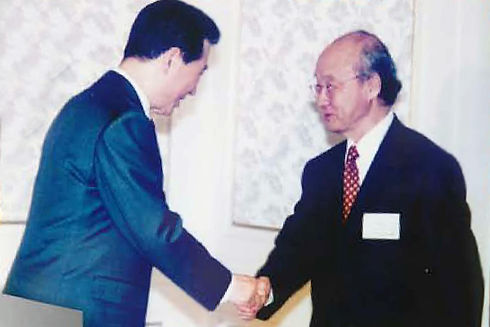
Internationally recognized for his role in Track II diplomacy, Dr. Park facilitated dialogue between North Korea, South Korea, China, Japan, and the United States during periods of heightened political tension on the Korean Peninsula. Through decades of humanitarian engagement and diplomacy, he became a trusted bridge between cultures and governments often separated by ideology and conflict.
Today, the Han Park Peace Institute continues this global mission through research, peace education, international collaboration, and the Korea Reunification Initiative — advancing people-centered approaches to diplomacy, reconciliation, and long-term global harmony.